Electrical Renovation Tips For Westwood And Charleswood Homeowners

Renovating a home in established Winnipeg neighbourhoods like Westwood and Charleswood comes with a unique set of charm - and a specific set of electrical challenges. The value of modern amenities and upgrades in these neighbourhoods cannot be overstated, as they enhance both comfort, safety, and accessibility for homeowners.

Electrical renovations in Westwood and Charleswood homes must adhere to the current Winnipeg Electrical By-Law 72/2022, which incorporates the 2021 Canadian Electrical Code. It is also important to hire licensed electricians for any electrical work during renovations to ensure safety and compliance.

Whether you are planning a modern kitchen overhaul or finishing a basement, ensuring your electrical system is up to code is the most critical step in protecting your investment and your family. As specialized Winnipeg electricians, we understand the specific architectural history of these areas, from mid-century builds to custom-built homes. This guide will help you navigate the essential electrical considerations for your next project:

Key Renovation Tips For Your Charleswood Home

When planning electrical renovations in Charleswood, it is vital to account for the age of the local infrastructure and the specific details of your property. Many homes in this location were built during eras with lower power demands than today’s modern appliances and EV chargers require. In fact, many older homes in Westwood and Charleswood still operate on 60-amp service, which does not meet the needs of modern households. Upgrading to a 100-amp or 200-amp service is highly recommended for safety, capacity, and to meet current standards - an important consideration for anyone buying or maintaining a property.

Regular maintenance of your electrical system is essential to preserve safety and functionality, especially as your property ages or as you plan for future buying or selling opportunities.

The Aluminum Wiring Factor: What You Need To Know

A common reality for homeowners in Westwood and Charleswood is the presence of aluminum wiring, which was standard in many homes built between the mid-1960s and late 1970s, when the price of copper spiked. While not inherently illegal, aluminum wiring can become a fire hazard if connections oxidize or loosen over time. Signs of problems with aluminum wiring can occur, such as discolouration of the wall receptacle, flickering lights, or the smell of hot plastic insulation. 

During a renovation in mature Winnipeg neighbourhoods, it is recommended to replace aluminum branch wiring with copper to improve safety and compliance. This is also the ideal time to have a professional assess your home for signs of overheating or “pigtailing” needs to ensure compatibility with modern copper-rated devices and to integrate safe electrical systems. Additionally, some insurance companies may ask for a specific electrical contractor report if a home has knob and tube wiring, so proper documentation and inspection are important.

Why Choose Powertec For Your Charleswood Home

At Powertec, we don’t just provide generic electrical services; we deliver local expertise tailored to Winnipeg’s West End.

Powertec is committed to providing safe and accessible electrical solutions and is dedicated to ongoing improvement. We are proud of our track record in Westwood and Charleswood, and our diligent work on renovation projects ensures quality and safety for homeowners.

Don't Let Outdated Wiring Stall Your Renovation

Nothing kills the momentum of a renovation like discovering a “bird’s nest” of old wiring once the drywall is removed. Knob and tube wiring was used in homes in Canada for almost 50 years, starting in the early 1900s. If you are planning a custom build or a major addition in Charleswood, proactive planning is your best defence against cost overruns. Knob and tube wiring that was installed properly can provide many more years of service, but problems can occur when homeowners install additional outlets or new circuits tied into the old wiring. Using 25 or 30-amp fuses in a circuit designed for 15 amps can cause the wire to overheat, leading to safety issues. 

Knob and tube wiring is not inherently a problem if it is restricted to rooms without major appliances. However, older homes in Winnipeg may require a full knob & tube removal or rewire of aluminum wiring for safety and insurance purposes. By integrating a full electrical assessment into your early design phase, you can ensure that your lighting, smart home features, and power needs are seamlessly integrated into the finished product. In many cases, a fully gutted and renovated house will also include updates to plumbing, fixtures, flooring, bathrooms, and necessary repairs to ensure the home is safe and modern.

FAQ For Westwood And Charleswood Homeowners

Will aluminum wiring affect my home insurance in Winnipeg?

Yes, many insurance providers in Manitoba require an electrical inspection or specific remediation (such as pigtailing or replacement) before they will issue or renew a policy on a home with aluminum wiring.

Do I need a permit for an electrical panel upgrade in Winnipeg?

Absolutely. Any upgrade to your electrical service or panel requires a permit from the City of Winnipeg to ensure it meets the current Canadian Electrical Code.

Can I just replace my outlets if I have aluminum wiring?

No. Standard outlets are often designed for copper. Connecting aluminum wire to a copper-only device can lead to overheating and fire; you must use devices specifically rated for aluminum (CO/ALR) or have a professional perform proper copper-to-aluminum transitions.

Ready to start your Westwood or Charleswood renovation? Contact our team at Powertec today to schedule an inspection and ensure your home's electrical system is ready for the future.

Do I Need An Electrician To Change A Light Fixture?

Do I Need An Electrician To Change a Light

DIY projects are incredibly satisfying; as electricians, we fully appreciate the desire and willingness to tackle projects of all kinds around the house. All of us here at Powertec Electric have done DIY projects at one point or another, and most of us have DIY projects we plan on doing in the future.

Here’s the thing: We’re electricians, so DIY electrical projects are in our wheelhouse. You’re probably not an electrician, or you wouldn’t be reading an article about whether or not you need one to change a light fixture.

With that in mind, the answer is yes: You need an electrician to change a light fixture. Changing one without an electrician can be incredibly dangerous, time-consuming, and expensive. Here’s why:

Potential DIY Obstacles

Improperly Fitting Mounting Brackets

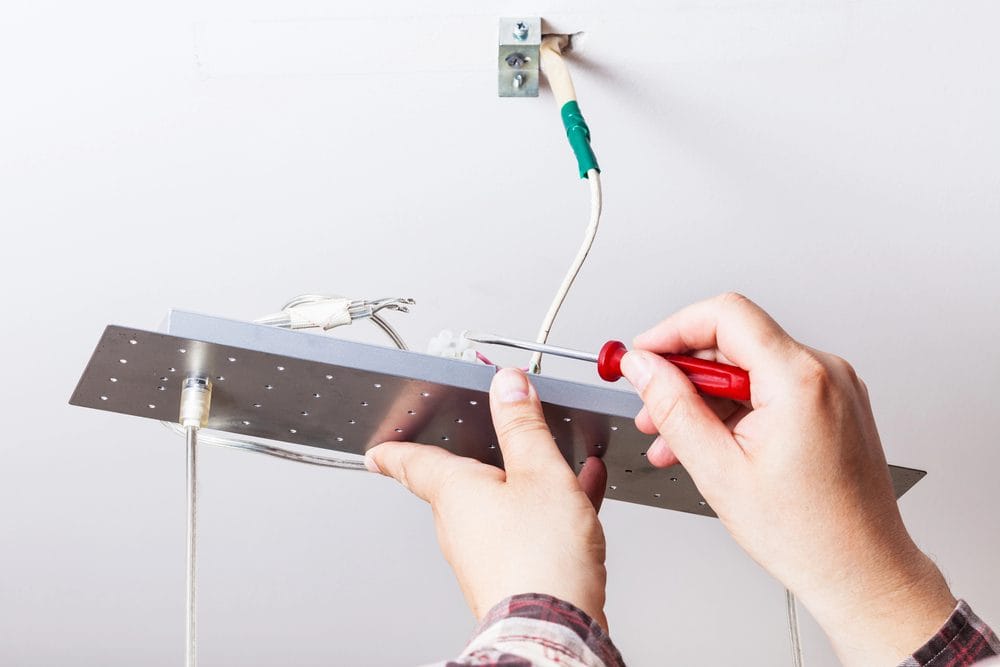
The new light fixture you’ve purchased will come with mounting brackets. The problem here is that the mounting brackets that come with your new fixture might not be properly sized for your current configuration. 

The size and location of junction boxes, joists, walls, and more can all impact how your mounting brackets should be sized. Don’t risk using an improperly sized bracket, or your light fixture could become unstable—that’s a real safety hazard! 

Screws That Are Too Long

Hardware continues to be a potential problem regarding the screws that come with your fixture—or any screws that you might have lying around. Screws that are too short are an obvious problem; they simply won’t allow you to secure your fixture.

Long screws are a bigger problem since you’ll be more tempted to use them. When your screws are too long, it might be impossible for you to mount the fixture flush against the wall or ceiling, leading to instability. 

The screws may also end up protruding into the junction box—which can lead to damaged wires and short circuits. It’s a Goldilocks scenario; your screws need to be just right.

Wires That Are Too Short

The wires in your junction box may be too short. These wires are difficult to work with, which can lead to loose connections. In many cases, they’re impossible to work with, and you’ll need to lengthen the wire. 

To do this, you’ll need a wire stripper, spare wires, and a whole lot of electrical knowledge; extending wires is not a job we recommend doing yourself, even if you feel you’re ready to install your own light fixture. 

Live Wires Can Shock You

Turn off the breaker and start installing your new light fixture; simple enough, right? Not so—your junction box might contain wires and connections that aren’t actually on the circuit you turned off. That can lead to serious shocks; a non-contact voltage detector is the second best way to prevent injury or even death. The best way? Don’t try doing it yourself—call your electrician instead! 

Feeling Unsure? Contact Powertec Electric Today

“Do I need an electrician to change a light fixture?” is a good question—and the answer is yes. Spare yourself the effort of going to the hardware store, messing with all the wires, and literally risking life and limb to change your fixture. 

Call the pros at Powertec Electric instead. We’re electricians in Winnipeg working hard every day to ensure that our customers have high-quality electrical services at their fingertips. Contact us today; we’ll change your light fixture in no time flat! 

How Upgrading Your Fixtures Can Save You Money

How Upgrading Your Fixtures Can Save You Money

Did you know that your old fixtures might actually be costing you more money than they need to? You can look at both plumbing fixtures and lighting to see how some simple upgrades could be the final touch necessary to save hundreds on utility bills at the end of the year. 

New fixtures will give your home a much-needed upgrade and save you money. Here is what you need to know to start upgrading your lighting: 

Daylight Sensors Turn Off Lights

Many homeowners are unaware of the technological upgrades available with their task lighting. In some newer fixtures, you will find daylight sensors that automatically turn off the lights when the sun comes out. This means that you only pay for the electricity that you truly need and let the sun do the rest of the work. 

Energy Efficiency Incentives

One way to save money on the cost of your new upgrades is to install energy-efficient fixtures. This applies to upgrading plumbing fixtures as well as your indoor lighting. Some provinces provide credits for making the switch to greener fixtures. 

For example, Manitoba Hydro might  offset the cost of moving from incandescent bulbs to LED bulbs that last longer. 

If you are worried about the out-of-pocket cost of upgrading your plumbing fixtures or lights, these incentives make it a little easier on your wallet. 

Increase Home Value

When you replace older plumbing fixtures and lighting, you are making a solid long-term investment in your home. Prospective home buyers are looking for new fixtures that cut back on energy costs and water consumption. Outdated plumbing fixtures and poor lighting don't impress buyers. 

Sell your home for top dollar by upgrading to all LED lighting and using water-efficient bathroom fixtures. 

People are looking for energy savings that can substantially cut down on their monthly energy bills. As a result, they are willing to pay a higher price tag for high-quality fixtures. Look for modern fixtures that match the design and aesthetic of the rest of the home. 

Add Outdoor Lighting 

Another way to increase home value is to add more outdoor lighting. This deters burglars and allows for outdoor space enjoyment even after the sun sets. This can take the form of floodlights, bulb lighting, or anything else that illuminates both the front and rear parts of your home. 

In particular, you might want to investigate solar lighting that doesn't cost a dime (after initial purchase) to brighten up your living spaces. This ensures that you can always use your outdoor spaces without adding to your utility bills. 

Get Significant Savings for the Average Household

Upgraded features like new fixtures for your home can lead to a significant difference in your monthly energy bills. Look for fixtures rated by Energy Star and those that use LED bulbs, as well as some of the other features listed above. 

When you are ready to find new lighting solutions in Winnipeg, let Powertec Electric help you save money! 

Office Building Electrical Safety Guide & Tips

Office Building Electrical Safety Guide and Tips

No matter what type of business you may be running, electricity is at the heart of all you do. Your employees wouldn’t be able to run their computers or fax those documents without a grounded electrical system. The question is: How can you ensure that your office is running smoothly and safely when it comes to your power? 

This guide to office building electrical safety and tips will help you make the most out of the machines in your office and set you up for success!

Install More Power Outlets

In many commercial businesses, there are hundreds of items that need to be hooked up to power. You may have dozens of computers, printers, fax machines, and copiers that all need electricity to function. Unfortunately, many offices lack the proper number of outlets to supply their office with the power they need. This leads to overloading the circuits with too many power strips and extension cords. 

If this describes your office, consider hiring an electrician to install outlets and circuit breakers to accommodate your needs. This is the best way to safely handle your need for more power. 

Inspect Outlets & Wires

One of the best things you can do to maintain electrical safety in the office is to keep a close eye on the condition of your outlets and wires. Outlets should not be discoloured, which could indicate that there is some burning going on. Similarly, your cords should not be frayed or torn, exposing the wires inside. Both of these issues can lead to fires in the building, so be sure to replace them or call an electrician to inspect your outlets right away! 

Pay Attention to Flickering

When you run the toaster oven or print out a long document, do you notice that the lights flicker or dim? This type of fluctuation in the power running to your lights could be caused by an overloaded circuit or a wiring short. It should be taken seriously and addressed by an electrician to keep everyone safe. In the meantime, unplug the offending appliance to give the circuit as much of a break as possible until it can be remedied. 

Get the Right Wattage

Take a brief stroll down the lighting aisle at your local home improvement store, and you’ll notice just how many different light bulbs there are. Many business owners think that a higher wattage is always better, but your light fixtures might not be able to handle it. Make sure that you’re only buying bulbs that are the recommended wattage for your fixtures.

Contact an Electrician With Questions

Are you unsure how to handle the electrical issues in your office? If you’re searching for top-notch Winnipeg electrical work, you need to contact Powertec Electric. We can help you address things that are going awry and/or provide you with preventive care for your electrical system. Give our experienced team a call today to learn more about how we can help you safely care for your office!

Thinking Of Upgrading Your Electrical Panel?

Thinking of Upgrading Your Electrical PanelYou’re tired of dealing with flickering lights, blown breakers, and outdated appliances. Is it time to invest in a new electrical panel with more capacity? The answer depends on why you need it.

We’re going to dive into thrie most common reasons why homeowners choose to upgrade their electrical panels, and why you should hire a professional to do so:

Signs That It’s Time To Upgrade

On the fence about buying a new electrical panel? If you notice the following issues in your home, it might be time to call an electrician:

The electrical panel is older than 20 years

Think about how our electrical needs have changed over the past few decades. Years ago, most households only had a handful of electronics—now, it’s hard to count how many are in a single household. 

There are computers, televisions, cell phone chargers, kitchen appliances, laundry machines, and HVAC systems that didn’t exist when older houses were built. If you own an older home, it may lack the capacity to power your frequently used appliances.

Breakers keep blowing

If you notice flickering lights, appliances that shut on and off, and breakers that frequently trip, then you probably require an electrical panel with a greater capacity.

Your current electrical panel uses fuses

Maybe you don’t trip breakers in your home because you don’t have breakers. Fuses tend to burn out and require higher maintenance than an electrical panel with breakers. Oftentimes, fuses can’t keep up with modern energy demands. They also lack safety features like GFCIs (ground fault circuit interrupters).

You’re installing a new appliance

Heating/cooling systems, dryers, and water heaters—these appliances draw large amounts of power. You don’t want to install your new hot tub and then find out you lack the capacity to power it.

If you’re upgrading or installing a high-power appliance, chances are you’ll need a new electrical panel, too.

The electrical outlets are outdated

Ever wondered why old outlets have two prongs, but new ones have three? The third one is called a ground connector. By grounding the outlet, it prevents electrical shocks that can be lethal if the wires get damaged. 

The third prong is an alternate route for the electricity to go if there is a fault. This modern safety feature prevents electrical hazards in your home.

Estimating Your Energy Demand

Once you’ve decided that your electrical panel requires an upgrade, you’ll need to figure out how much more energy you’ll need. Ideally, you want to have a little extra to avoid upgrading again in the future. But how do you calculate your energy usage?

Check out this energy consumption calculator to help estimate your usage. This will give you a ballpark idea of which size electrical panel will suit your needs.

Don’t Do This On Your Own!

With a new electrical panel, you won’t need to worry about blowing fuses or tripping breakers anymore. You can sleep easily knowing that your home is capable of safely meeting your energy needs.

But when it comes to electrical work, it’s always best to call a professional. This work is dangerous and complex, and those without the proper training risk starting a fire. In addition, failing to disconnect the power before doing work can be a lethal mistake. 

At Powertec Electric, we offer commercial and residential electrical services in Winnipeg. If you’re considering upgrading your home’s electrical panel, we can help! Give us a call today for a free quote.

Do You Need An Electrician To Add A New Light Fixture?

Do you need an Electrician To Add a New LightWhen you install new hardwood flooring or repaint the interior of your home, you show it off with a sense of pride. Not only did you upgrade the appearance of your property, but you did so with your own two hands!

If your living room or bathroom is looking a bit bland, add an element of surprise by installing a new light fixture. You can choose from models like:

You’ve gone ahead and purchased a new fixture for your home, but now you’re faced with another problem: how do you install it?

Given the number of jokes about screwing in a light bulb, everyone can agree that this step is not very challenging to do. But installing a light fixture can be considerably complicated. Here’s why:


Problems You May Encounter

Assembling the fixture is more difficult and dangerous than a typical piece of furniture. Here’s what you might be dealing with:

Connecting the wrong wires

Have you ever seen an action movie where the main character had to connect certain wires to deactivate a weapon? If they made a mistake, the building would go up in flames.

Improper electrical work may cause a house fire. Doing the work yourself isn’t worth the damages that faulty wiring can cause.

A mounting bracket that won’t fit

The brackets provided with your light fixture may not be compatible with your existing system. Perhaps they’re the wrong size or the screws are too long. Only an electrician can solve these issues; they can properly attach the fixture and cut the screws to size.

An overloaded circuit

It’s difficult for the average homeowner to know exactly how much power they can draw from their electrical panel. Going over the allotted amount will frequently trip the breaker and overheat the wiring. This is why you must check the wattage of the fixture before you purchase it, and ensure that your circuit has enough amperage to power it. In older homes especially, the electrician may need to run another wire from the panel.

Shocking yourself

Even if you turn off the breaker that’s connected to your light fixture, you might still be harmed. That’s because some wiring systems connect to other electrical junctions which may still be on. An electric shock can be fatal, so it’s important to exercise extreme caution with this type of work.

A light that’s too heavy or high up

Holding your arms over your head for an extended period can be exhausting. Now imagine that you also need to hook up precise wiring and secure a heavy fixture to a ceiling. It’s not the type of task you can necessarily accomplish on a typical Saturday afternoon. 


Outdated light fixtures can be a real eyesore. By upgrading them, you can modernize and brighten any room in your home. But when you purchase a new fixture, reconsider before you try to install it yourself. In general, electrical work is best left to the professionals. Even if you’re renovating on a budget, it isn’t worth jeopardizing the health and safety of your family just to save on installation costs.

Looking for electrical services in Winnipeg? Powertec Electric can help. We’ll set up your new light fixture quickly and safely. Give us a call to schedule an installation.

Old House Wiring, Inspection, and Repair

Old House Wiring Inspection RepairCharacter homes come with many advantages: they’re affordable, unique, and historic. But older houses have other problems, like outdated wiring. 100 years ago, power demands for the average household were very different; they didn’t have computers, TVs, and power bars like we do now. To live a technology-driven lifestyle in a historic home, adjustments need to be made. 

It’s recommended that you schedule an electrical wiring inspection whenever you buy new appliances, renovate your home, or if the property is older than 40 years. When you are looking at buying an older home, be sure to ask about what electrical system is being used. Historic homes tend to have outdated wiring systems; here are two of the most common ones, and the issues with them:

Knob and Tube Wiring:

Used as early as the 1900s, this was the first type of electrical wiring installed in homes. These 100 year-old systems are considered obsolete by contractors. If installed correctly, knob and tube wiring can remain in the house, albeit with some limitations (no three-pronged electrical outlets). It does come with some risks, like the lack of a grounding conductor to help prevent electrical fires. The wiring insulation is a fire hazard as well. To add more amps to old homes, contractors make modifications to knob and tube wiring that can be unsafe. Your knob and tube wiring system can be repaired rather than replaced, but it should be inspected by a qualified electrician. It may be difficult to get house insurance if you have a knob and tube system.

Aluminum Wiring:

This material was popularly used in homes between the ‘60s and ‘70s because it was less expensive than copper. But there’s a reason for the discounted price: aluminum breaks down more easily than copper does. This wiring poses a few serious safety hazards that homeowners should be aware of. Aluminum is a soft material, which means it can be damaged easily; this can create a weakness in the wiring. It expands when it heats up, meaning that screws will loosen due to the changing shape. Aluminum wiring is also prone to rusting or oxidization. When rust forms, it prevents electricity from flowing, which can result in overheating. If your home has aluminum wiring, you should contact an electrician to discuss replacing it.

Many homeowners are concerned about replacing wiring because they do not want to damage historic elements of their home. But failing to repair these systems poses a safety risk for all members of the household. Keeping your electricity up to code will prevent a fire or another hazard from occurring - one that can be even more damaging to your home than updating the electrical. In some cases, the electrical wiring doesn’t need a total replacement; an experienced electrician can modify it to suit the power demands of your household. An inspection can answer these questions for you and tell you whether your system needs a repair or an update.

Are you concerned about the wiring in your home? For inspection and repair, contact the electrical contractors in Winnipeg at Powertec Electric. We can identify the type of wiring in your house and find ways to increase its safety and efficiency. Call us today to speak with an experienced contractor about your electrical concerns.

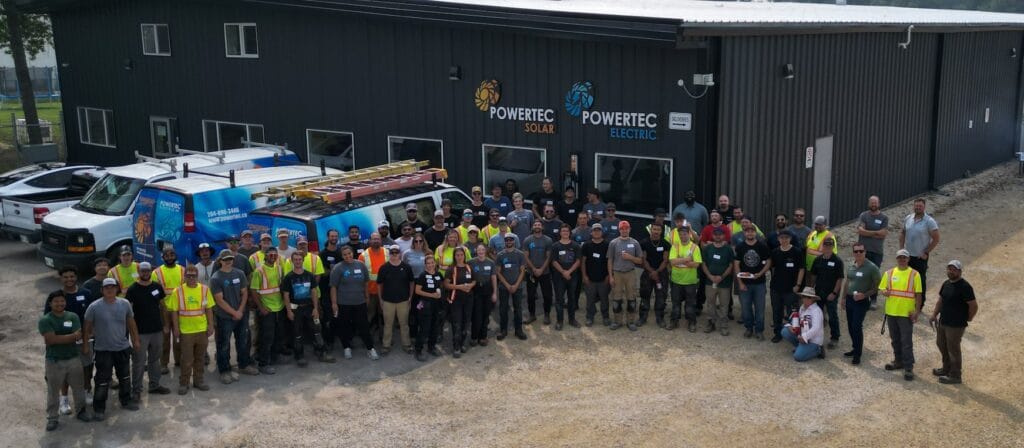
Powertec Electric’s New Location Is A Powerful Move Into The Future

WINNIPEG, Canada – Powertec Electric Inc. is one of the largest and most successful firms in Canada that provides electrical services for residential, commercial and industrial projects. Today, Powertec Electric is proud to announce the opening of its new location at 1433 Erin Street, Winnipeg, MB R3E259. 


The big move is part of an ongoing strategic plan to grow and expand the business further. The new site is significantly larger, has excellent access, and can accommodate more stock and many more staff members. 


The company had been on the lookout for different premises for a significant period of time, having acknowledged that they had outgrown their previous building. As with all aspects of their business, they wanted to take their time and ensure that whatever location they chose was suitable both for now and in the future. These requirements reduced the number of properties and sites that were available, but as this was a long-term plan, the owners of the company were prepared to wait until the right property and location became available. 


"It became apparent to us a long time ago that the rate at which our company and brand was growing would not be sustainable at our previous location, and so we put the wheels in motion to identify and then secure new premises," said Daniel Lacovetsky. "We wanted to future-proof the business and put it on a firm foundation for the future growth that we anticipate. It took a lot of hard work and time to find our new location, but we are thrilled to have been able to move into our new premises. We are now actively pursuing our goal of becoming the number one company in Canada that provides the best electricians and electrical services. We are confident that our target will be achieved. 


Powertec Electric Inc. provides a variety of electrical services for residential, commercial, and industrial customers. They get the job done right, and they don't just meet expectations – they exceed them! Their customers keep coming back because they are dependable, knowledgeable, and pleasant to work with. Their high-quality work and fair prices make them the perfect choice for every project. For more information about the company and the various services it provide, visit their website at https://www.powertec.ca

What Is The Difference Between A Breaker And A Fuse?

What Is The Difference Between A Breaker And A FuseThe electrician is coming to your home and you want to make sure you understand all of the lingo. How exactly is your home wired and what do you need to know about it? Most people have either a fuse box or a circuit breaker box in their home. It’s time that you learned how to tell the two apart and what makes one better than the other.


What is a Fuse? 

A fuse can come in several different shapes and forms, but the basic premise of how it works remains the same. It typically consists of a metal wire or filament with a glass, ceramic, or metal casing. When used in your home, you will probably find your fuses plugged into one central fuse box with all of the wiring. Electricity moves across the metal filament and through the fuse to power the next circuit. 

If there is too much power and you experience an overload, the fuse will melt. At this point, it effectively stops the electricity from continuing any further. It may take some time for a fuse to blow like this whereas a breaker can trip almost instantly. Keep in mind that a fuse must be completely replaced once it’s blown. 


What is a Breaker? 

A breaker is a much different item than a fuse, but it is also designed for electrical current to pass through it. A circuit breaker can work in one of two ways: it either has an electromagnet or a bi-metal strip. Both types work the same way by allowing the electrical current to pass from the bottom to the upper terminal. 

If the electrical current becomes too strong, the magnetic force of the strip will throw a small lever and cut off the current completely. Alternatively, the metal strip might bend and cut off the current. In either case, it is easy to reset a breaker. All you have to do is flip the switch from the off position back to the on position in your breaker box. 


Advantages and Disadvantages

There are a few different ways to compare fuses and breakers. They serve the same purpose, but they are entirely different things. As a result, there are some advantages and disadvantages to choosing each one. 

For example, fuses are relatively inexpensive and readily available. They are very fast to react and might be better if you are using sensitive electronics. The downside is that they must be fully replaced when they melt, which can be difficult to do in the dark or if a replacement is not available at the time. 

On the other hand, circuit breakers are more expensive to install and repair. They are a little slower to react to dangerous electrical current which could cause harm to electronics plugged in during a power surge. However, an overload can be easily fixed with just the flip of a switch. It can also be used for other applications like ground fault interrupters or GFCI outlets. These protect against electrical shock as well as overheating. 

If you are having trouble with your fuses or breakers, be sure to contact a professional electrician in your area. At Powertec Electric, we can help you correct major issues with your fuses or breakers today! 

How Does A Circuit Breaker Box Work?

How Does A Circuit Breaker Box WorkYou are just settling down in the evening after work with a good movie. The lights are dimmed and your portable space heater is resting near your feet. Things are feeling pretty comfortable and cozy when everything shuts down with no apparent reason. You hear a loud click, and then it’s lights out for you and your movie time. 


This is caused by an overloaded circuit - which doesn’t have to be scary; understanding how your circuit breaker box works is relatively simple. Here are all the facts you should know to feel more comfortable about how electricity works in your home: 


What is a Circuit Breaker Box? 

The electricity that enters your home first flows through the circuit breaker box. Inside of that box are several different fuses, each one a different size. Smaller rooms tend to have a smaller circuit while larger rooms have more appropriately-sized circuits. These are typically referred to as breakers. 


Builders estimate which rooms require larger breakers based on the number of appliances that room will typically hold. For example, kitchens and laundry rooms tend to have bigger circuits to accommodate the influx of electricity required to run all of the appliances. Bedrooms that only require small lamps or overhead fans typically have smaller breakers. 


What is a Circuit Overload? 

The circuit breaker, the wire, and the wire insulation work together to let electricity flow to your home. Each breaker is designed to accommodate a certain amount of electricity and no more. If you try to funnel too much electricity through a breaker that cannot handle it, the wire will heat up and that could cause disastrous consequences. 


Fortunately, the circuit breaker can tell when you are using too much electricity for the wires to handle. This is when the breaker flips or “trips” as most people refer to it. The breaker flips from the on position and turns off all of the electricity flowing to that particular area of the home. If this does not occur, then the wire will heat up, damage the wire insulation, and eventually spark a fire. 


How to Fix the Tripped Breaker

Begin by turning off all the lights and appliances in the room where the breaker has tripped. This is necessary so that you do not automatically overwhelm the breaker when resetting it. Unplug the extra appliances or turn them off. 


Inside your circuit breaker box, you will find the tripped breaker. Move it from the “off” position back to the “on” position. This should reset the flow of your electricity. You can return to the room and slowly begin turning on some of the lights and appliances again. Remember not to turn everything back on. You will have to spread out some of your appliance usage to other rooms that still have space on their breakers. 


Understanding the Ins and Outs 

Understanding the ins and outs of your circuit breaker box is important for any homeowner. Knowing what happened and how to fix it can help to save you hundreds of dollars in service repair costs. If you are still struggling with your circuit repair box, then be sure to call Powertec Electric, the leading electrical contractors in Winnipeg